
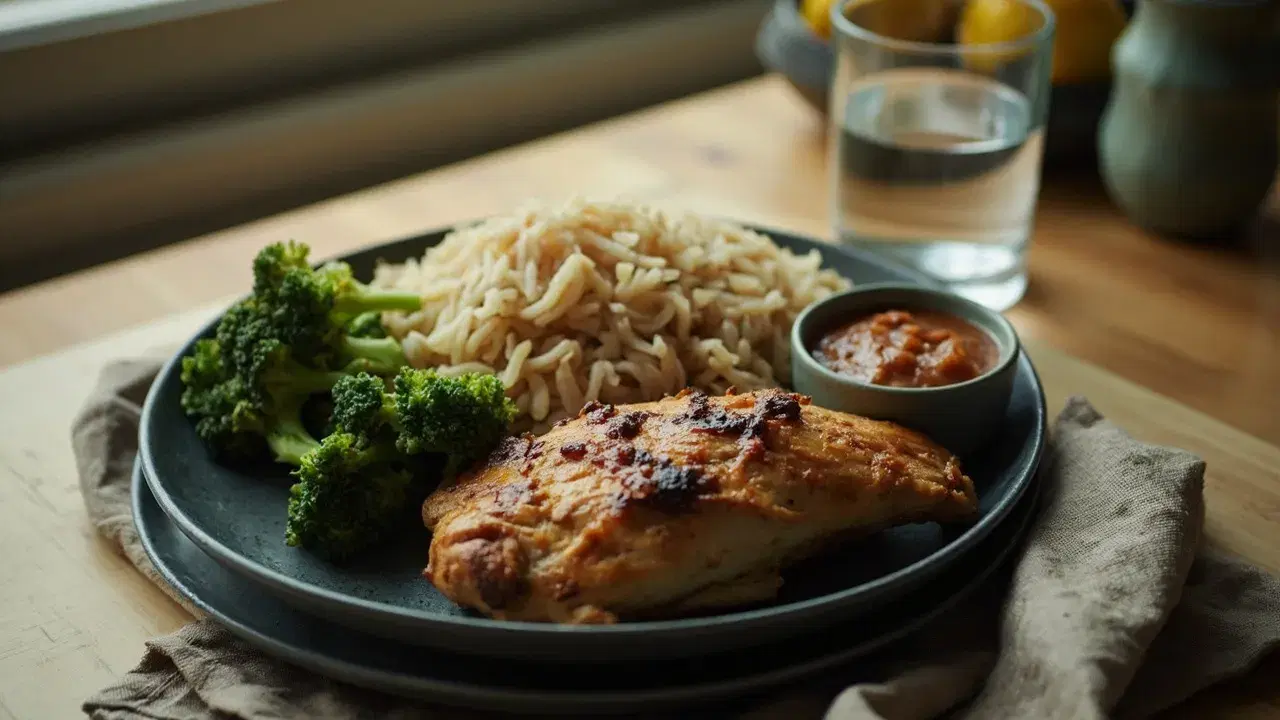
Recording a meal can become tedious when you are searching for ingredients, checking portions and entering the same details again. Start with one ordinary meal and a process you can understand. The aim is a useful record of what you ate.
This guide walks through choosing an input, checking an estimate and reading your daily view. You do not need to know every ingredient to begin, but it helps to distinguish what you know from what you are estimating.
What calories and macros tell you — and what they do not
Calories are a measure of energy. Protein, carbohydrate and fat are the nutrients that carry that energy. When an app gives you those four numbers for a meal, it is giving you a description of the meal, not a verdict about your day.
- They tell you what went into the log. Two descriptions of the same plate can differ, and that difference is information.
- They let you compare meals with each other — this lunch against yesterday’s lunch — which is a more useful question than whether you “passed”.
- They do not tell you whether you are healthy, whether you did well, or what you “should” have eaten. A number is not a moral score, and one meal is not a verdict.
Choose a manageable starting point
Try a small starting task: log a meal, review the suggested items and save it. Once that feels familiar, you can decide how tracking fits your routine.
- Pick the meal you will log todayChoose a familiar meal whose main ingredients you know.
- Decide where the estimate will be reviewedLook for the review step, where you can check the suggested foods, quantities and nutrition values.
- Write down what you will do when you do not know somethingIf you are unsure about an ingredient or quantity, say so in your description and remember that limitation when reading the result.
Log one meal the way it happened
Makro supports photos, written descriptions, barcodes and nutrition labels. Choose an input that fits the meal. For packaged food, check the serving size on its label. For a mixed meal, describe the main ingredients and any portion details you know.
What I know / what I am estimating
- What I know
- Chicken breast, roughly the size of my palm — that is a guess about weight, not a measurement.
- Rice, about a fist. I cooked it from a dry weight, so I roughly know it.
- Broccoli, a decent handful.
- There was oil in the pan. I did not measure it.
- What I am estimating
- The oil is the part nobody sees. Its amount affects the estimate.
- The chicken was cooked, so it lost water. Cooked weight and raw weight are not the same thing.
- What that means for the entry
- A useful log is one that shows its seams. “Cooked chicken breast, about a palm-sized portion, rice from a weighed 90 g dry, broccoli, olive oil added — amount not measured” is a better entry than a tidy number with no caveats, because it records the assumptions behind the entry.
Review the portions, the preparation and the estimate
This is the step that makes the rest of the app worth using. Before an entry is saved, Makro shows the items it matched, the portion it assumed and the macros that came out. You can change the name, the quantity and the nutrition values before saving.
- Check the item, not just the total. A single wrong item is often the whole problem.
- Check the portion against the plate in front of you, not against your memory of yesterday’s plate.
- Check the preparation. Grilled and fried are not the same entry, and neither is “with sauce”.
- Correct the details you know. Describe uncertainty in the input rather than treating an assumed quantity as a measurement.
Read the day, then choose one next step
After saving a meal, look at how it contributes to your daily totals. Those totals reflect the food you recorded, so missing entries and uncertain portions affect the picture.
- Read the totals in contextCheck which meals are included and whether any portions still need correction.
- Choose one practical next stepYou might save a package label for later or make your next meal description more specific.
- Leave the rest aloneA missed target does not require punishment or compensation. Use the record to understand your routine.
Common friction, and what to do about it
These are common situations to plan for.
| What goes wrong | Why it happens | The smallest useful response |
|---|---|---|
| Mixed meals | There is no single food to match, so the estimate is built from several guesses. | Describe the components separately and remember that the displayed total is still an estimate. |
| Sauces and oil | A photo may not show them, and their quantities can be unclear. | Add the ones you know about, and treat the rest as unknown. |
| Interrupted routines | Travel, illness and busy weeks can interrupt a routine. | Resume with the next meal you choose to log. A partial day should not be interpreted as a complete daily total. |
| Nothing fits | Some meals simply do not match anything in the database. | Log it as a custom entry with the numbers from the label, or skip it deliberately and note that you did. |
When general tracking advice is not enough
This article is general education. It is not medical advice, and it is not a substitute for someone who is qualified to advise you. Get individual professional support if you are managing diabetes, kidney disease, a gastrointestinal condition, an eating disorder or a history of disordered eating, if you are pregnant or breastfeeding, or if tracking has started to feel punishing or compulsive.
Common questions
More about this topic.
Do I need to hit a specific calorie or macro target for this to work?
You can follow this logging walkthrough without choosing a target here. Individual targets depend on your circumstances; this guide does not recommend one.
How accurate are the estimates?
Makro does not publish an accuracy percentage, because we have not published the reference method, sample and evaluation that such a number would need. In practice, entries with a label or a weighed portion are the most dependable, and mixed meals are the least. Reviewing the estimate is part of using it, not an optional extra.
What happens if I miss a day?
You can resume with the next meal you choose to log. Keep in mind that missing days leave gaps when you review a longer period.
Can I log food that has no label and no recipe?
Yes. Describe it in a sentence, add what you know, and mark the rest as unknown. An imperfect entry you can correct is more useful than an entry you skip because you did not want to guess.
About this article. General education from the Makro team. Product information checked November 4, 2026. This article is not medical advice or an individual nutrition plan. Product guidance from the Makro team, with further reading linked below.